Choosing a manufacturing partner is one of the most important decisions in an electronics product lifecycle. A capable China electronic manufacturers supplier should offer more than competitive pricing. Engineering support, component sourcing, PCBA quality, enclosure manufacturing, testing, production capacity, and communication all affect whether a product reaches the market reliably. For B2B buyers, a structured supplier evaluation can reduce technical, quality, and supply-chain risks before mass production begins.
Verify Manufacturing Capabilities
Start by determining whether the supplier can actually support the complete scope of your project. Ask about PCB assembly, component sourcing, firmware programming, functional testing, enclosure production, final assembly, and packaging.
A supplier that only handles one manufacturing stage may require several external partners. This can increase coordination work and make responsibility for quality less clear. By contrast, an integrated manufacturing partner can simplify project management from prototype development through production.
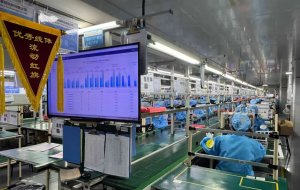
We recommend checking production equipment, engineering resources, factory capacity, and experience with products similar to yours. A factory tour or detailed production audit can also help confirm whether the capabilities presented in a quotation match actual operations.
Evaluate Quality Management and Inspection
Quality systems should be assessed independently from price. ISO 9001 provides a useful framework because it addresses documented processes, operational control, performance evaluation, and continual improvement. Certification alone does not guarantee a perfect product, but it provides evidence that a formal quality management system is in place.
For PCBA production, buyers should also ask which industry standards guide assembly and inspection. IPC-A-610 is widely used for electronic assembly acceptance, while IPC J-STD-001 addresses soldering processes and materials. The latest J revisions were released in 2024.
Request information about incoming inspection, AOI, X-ray inspection where appropriate, functional testing, traceability, and final inspection. The supplier should be able to explain what happens when a defect is identified.
Examine Engineering and Design Support
A strong supplier should contribute before production rather than simply manufacture whatever files it receives. Review its ability to identify manufacturability problems, recommend suitable materials, improve component placement, and optimize assembly processes.
This is particularly important when your project requires Electronics & Enclosure Design Optimization. Electronic performance and mechanical design must work together. Connector positions, thermal considerations, PCB dimensions, mounting points, enclosure tolerances, and assembly methods can all influence production feasibility.
Our approach at Minewing includes supporting projects from concept and design through prototype, trial production, and mass production. This allows engineering decisions to be considered alongside manufacturing requirements rather than after the design has already become expensive to change.
Check Supply Chain and Component Control
Component sourcing deserves close attention when evaluating China electronics manufacturers. Ask how suppliers are selected, how approved components are controlled, and how shortages or substitutions are handled.
For critical components, buyers should establish approved part numbers and change-control procedures before production. A supplier should also communicate potential obsolescence, lead-time risks, or availability issues rather than making unauthorized substitutions.
Traceability becomes especially valuable when troubleshooting field failures. Lot information, inspection records, and production records can help identify where a problem originated and determine whether corrective action is required.
Assess Production, Testing, and Scalability
A successful prototype does not automatically mean a supplier can support stable mass production. Ask how the manufacturer manages pilot runs, process validation, production scheduling, testing, and capacity planning.
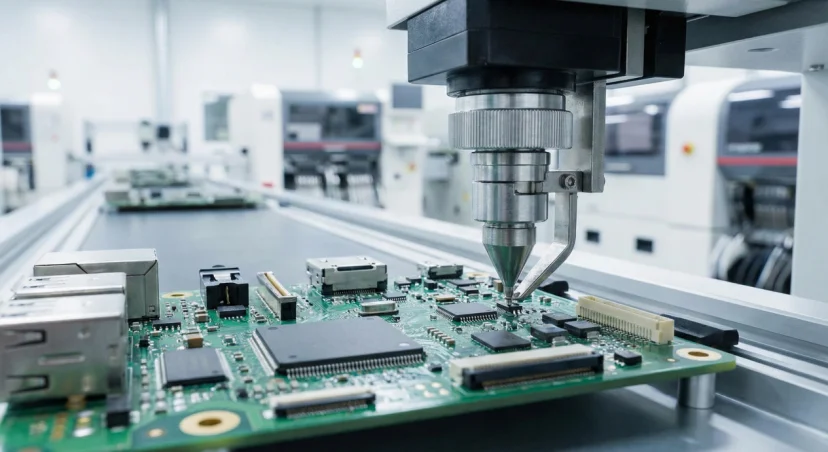
At Minewing, our factory capabilities include SMT and DIP operations, AOI and X-ray inspection equipment, component programming, aging testing, finished-product assembly, and functional testing. We also cover injection molding and packaging to support a broader product manufacturing workflow.
The key question is whether the supplier can maintain consistent quality when order volumes increase. Request evidence of production capacity and ask how quality controls change between prototypes, small batches, and mass production.
Confirm Full Product Manufacturing Services
For companies developing finished electronic products, a one-stop model can simplify procurement and project coordination. Instead of managing separate PCB, enclosure, assembly, testing, and packaging vendors, buyers can work with one manufacturing partner.
Our PCBA + Enclosure Full Product Manufacturing approach is designed around this requirement. We can coordinate electronic assembly with enclosure production and final product assembly, helping reduce handoffs between manufacturing stages.
We also provide One-Stop Manufacturing, Assembly & Packaging, covering processes from parts manufacturing and sub-assembly to final assembly, testing, inspection, packaging, and logistics. This integrated approach can give B2B customers a clearer production workflow and a single point of coordination.
Review Communication and Commercial Terms
Technical capability is only part of supplier qualification. Evaluate how clearly the manufacturer communicates quotations, engineering changes, production schedules, quality issues, and delivery risks.
Before signing a long-term agreement, clarify tooling ownership, intellectual property protection, payment terms, minimum order requirements, warranty responsibilities, acceptance criteria, and procedures for engineering changes.
A supplier that responds quickly but vaguely may create more risk than one that provides detailed, documented answers. We believe transparent communication should continue from the initial concept discussion through production and shipment.
Building a Lower-Risk Manufacturing Partnership
Selecting a China electronic manufacturers supplier should be treated as a technical and commercial evaluation rather than a simple price comparison. Buyers should examine manufacturing capabilities, quality systems, engineering expertise, supply-chain control, testing, scalability, and communication before committing to production.
At Minewing we combine electronics manufacturing with enclosure production, assembly, testing, and packaging to support projects from concept to production. For B2B customers, this integrated model can provide a more coordinated path from engineering development to finished-product delivery.
Ultimately, the best supplier is not necessarily the one offering the lowest initial quotation. It is the partner that can consistently translate your specifications into a manufacturable, tested, and scalable product while maintaining clear quality and project controls.