For electronics companies, getting a product to work is only the beginning. The path from an early concept to reliable mass production involves several stages, and prototyping and pre-production serve very different purposes. We use product design and prototyping to prove that an idea can function as intended, while pre-production helps us determine whether that validated design can be manufactured consistently at commercial scale. Understanding the difference helps B2B buyers allocate resources, control risks, and make better production decisions.

What Is Prototyping?
Prototyping is the stage where we create physical or functional versions of a product to test its design and performance. The objective is to learn whether the proposed hardware, structure, electronics, and user experience work together as expected.
Product design and prototyping can involve several iterations. Engineers may adjust component placement, PCB architecture, enclosure dimensions, firmware behavior, or mechanical interfaces based on test results. The prototype therefore serves as a practical tool for identifying weaknesses before substantial investments are made in tooling and mass production.
For electronics products, electronic prototype manufacturing is particularly valuable because it allows teams to evaluate actual circuit behavior rather than relying solely on simulations or design files.
What Is Pre-Production?
Pre-production occurs after the product design has reached a higher level of maturity. Instead of asking whether the concept works, we begin asking whether the product can be manufactured repeatedly according to defined specifications.
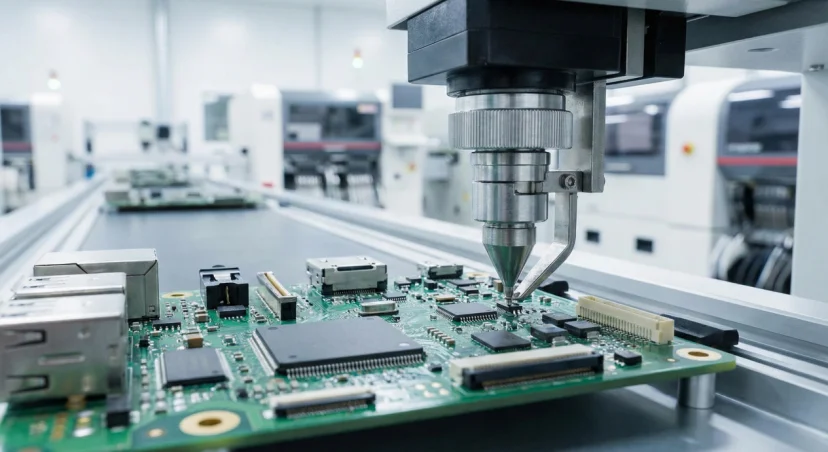
At this stage, we focus on manufacturing processes, component availability, assembly procedures, testing methods, quality controls, production documentation, and expected production yields. The objective is to establish a controlled process before commercial-scale manufacturing begins.
Therefore, our pre-production units are built much closer to the final production configuration than early prototypes. They create an opportunity for us to detect manufacturing issues while there is still time to implement corrections.
The Main Difference: What Are We Trying to Prove?
We understand the most obvious distinction between these two stages lies in their purposes. Prototyping mainly validates the product itself, while pre-production verifies the production process.
During prototyping, we may ask whether the wireless connection is stable, whether the enclosure accommodates all components, or whether the electronics perform the required functions. During pre-production, we ask whether operators can assemble the product consistently, whether automated testing can detect failures, and whether the supply chain can support planned production volumes.
This distinction matters because a successful prototype does not automatically mean that a product is ready for mass production.
A Security Hub Shows Why Both Stages Matter
Our intelligent multimodal alarm system project demonstrates the relationship between these stages. The plug-and-play security hub integrates a high-decibel siren with a multi-protocol wireless gateway for connected devices such as door sensors, motion detectors, and smoke alarms.
The product presented several engineering challenges. We handled Industrial & Structural Design to maintain component stability under high-decibel vibration while also developing the PCB and firmware architecture to optimize wireless connectivity.
During electronic prototype manufacturing, rapid prototypes allowed us to validate the design and address issues before production. This stage was particularly important because the combination of wireless electronics, a high-output siren, and a compact enclosure created interactions that needed to be assessed using physical hardware.
How Pre-Production Builds Manufacturing Confidence
Once the core design was validated, the focus shifted toward production readiness. We coordinated project management and supply chain activities to address component shortages and prepare the product for manufacturing.
Pre-production is where these activities become particularly important. A design may use components that are technically suitable but difficult to procure consistently. Similarly, an assembly process that works for a few prototypes may become inefficient or unreliable when hundreds or thousands of units are involved.
We therefore use pre-production to verify the practical manufacturing workflow. Testing procedures, assembly methods, sourcing plans, and quality controls can be evaluated before full-scale output begins.
Why Automated Testing Becomes Important
Testing requirements also change as a product moves toward production. Prototype testing often focuses on engineering validation and discovering design problems. Production testing must be faster, repeatable, and suitable for inspecting a large number of units.
For our alarm system project, we established automated testing lines as part of the transition to mass production. This helped us create a more consistent approach to checking finished units and supporting production quality.
The difference illustrates an important principle: prototypes help us learn about the product, while production preparation helps us create a repeatable system for building and testing that product.
When Should We Move From Prototyping to Pre-Production?
The transition should happen when the major design questions have been answered and the product is sufficiently stable for manufacturing validation. Moving too early can result in repeated production changes, while waiting too long may delay commercialization.
We typically consider factors such as functional performance, hardware stability, enclosure design, component availability, firmware readiness, manufacturability, and testing requirements before moving forward.
Our New Product Introduction (NPI) process provides structured stages for this transition, including Engineering Validation Testing (EVT), DVT, and PVT. These stages help us progressively identify and eliminate technical and production risks before mass manufacturing.
From Functional Proof to Production Readiness
Prototyping and pre-production are connected, but they are not interchangeable. Product design and prototyping help us discover whether a concept works and refine the design. Pre-production helps us determine whether that refined design can be produced consistently, tested efficiently, and supported by a dependable supply chain.
Our multimodal alarm system project demonstrates why both stages are necessary. We combined industrial design, structural engineering, PCB and firmware development, rapid prototyping, supply chain coordination, and automated production testing to move the product from concept toward mass production.
At Minewing, we provide one-stop electronics manufacturing support across these stages. Our electronic prototype manufacturing capabilities can help businesses validate new hardware, while our engineering and production resources support the transition toward scalable manufacturing. By treating prototyping and pre-production as distinct but connected steps, we help customers reduce development risks and approach mass production with greater confidence.