Finding the right electronics manufacturing partner in China can influence product quality, development speed, costs, and long-term supply stability. A supplier may offer attractive pricing, but that alone does not prove manufacturing capability or reliability. We recommend evaluating potential partners through a structured process that examines technical expertise, quality systems, production capabilities, communication, and scalability before entering a long-term agreement.

Define Your Manufacturing Requirements First
Before contacting China electronics manufacturers, we suggest creating a clear supplier brief. Define your product type, expected production volume, required certifications, component requirements, testing standards, target markets, packaging needs, and expected delivery schedule.
The manufacturing model also matters. Some projects require only PCB assembly, while others need complete product development, enclosure manufacturing, assembly, testing, and packaging. Knowing these requirements helps you compare suppliers on capabilities rather than simply comparing quotations.
For startups and growing technology companies, flexibility can be equally important. A supplier that only accepts large production runs may not be suitable when the project still requires prototypes, engineering validation, or small pilot batches.
Verify Manufacturing Capability and Experience
A professional supplier should be able to explain how it will manufacture your product, not simply provide a price. Ask about engineering resources, production equipment, testing processes, component sourcing, quality control, and experience with products similar to yours.
We also recommend checking whether the supplier manages manufacturing directly or outsources critical processes. Outsourcing is not automatically a problem, but buyers should understand which operations are performed internally and who is responsible for quality when multiple parties are involved.
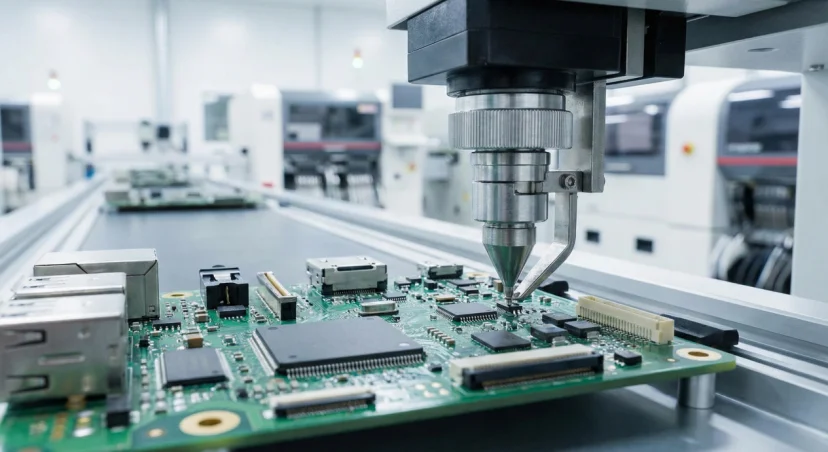
For electronics projects, capabilities such as PCB assembly, component sourcing, testing, mechanical integration, and final assembly can significantly affect project coordination. An integrated supplier can reduce handoffs between different vendors and make responsibility clearer.
Evaluate the Quality Management System
Quality should be evaluated through processes and evidence rather than marketing claims. ISO explains that ISO 9001 establishes requirements for a quality management system, including processes for maintaining and continually improving quality.
When we assess a China electronic manufacturers supplier, we request relevant certifications and clarify their scope and validity. More importantly, we investigate quality control practices covering incoming inspection, production, assembly, testing, and final inspection.
We also suggest asking how the supplier handles nonconforming products, corrective actions, traceability, and customer complaints. These details reveal much more about operational maturity than a certificate displayed on a website.
Review Component Sourcing and Supply Chain Controls
Electronic products depend heavily on component availability and consistency. A supplier should therefore explain how it sources critical components and manages alternatives when shortages occur.
Ask whether components come from authorized channels, how incoming components are inspected, and whether substitutions require customer approval. For products containing critical integrated circuits or specialized components, uncontrolled substitutions can create performance and reliability problems.
At Minewing, we emphasize reliable supply-chain management as part of our manufacturing approach. Our electronics manufacturing services include component sourcing, PCB assembly, testing, and production support, allowing us to coordinate multiple stages of the product lifecycle.
Test the Supplier Before Scaling Production
A supplier should not be judged solely by a successful sales conversation. Start with a prototype or trial production stage whenever the project allows it.
During this stage, evaluate whether the supplier follows specifications accurately, communicates engineering questions clearly, identifies manufacturability problems, and responds effectively when issues occur. Pay attention to documentation and revision control as well as the physical product.
We consider this stage particularly valuable because manufacturing problems are usually less expensive to solve before volume production. A supplier that provides useful design-for-manufacturing feedback can become more than an assembly provider; it can contribute engineering value throughout product development.
Compare Communication, Transparency, and Scalability
Communication is a practical part of supplier quality. Establish who will manage engineering communication, purchasing, production, quality, and logistics. Clear responsibilities reduce misunderstandings when specifications change or production problems arise.
We also recommend examining how the supplier will support your growth. A company may need several prototypes today but substantially higher production volumes later. The right manufacturing partner should have a realistic path from prototype development to pilot production and volume manufacturing.
At Minewing, we support projects from initial concept through prototyping, trial production, and mass production. We provide electronics and enclosure design optimization, PCBA and enclosure manufacturing, assembly, testing, and packaging. We also state that we have no strict MOQ requirement, allowing cooperation to adapt as project volume develops.
Make the Final Decision on Total Value
The lowest quotation should rarely be the only deciding factor. Buyers should compare total manufacturing value, including engineering support, quality performance, component sourcing, tooling, testing, lead times, communication, logistics, and the cost of potential failures.
A reliable China electronic manufacturing supplier should make its capabilities and responsibilities understandable before production begins. We recommend documenting specifications, quality requirements, acceptance criteria, intellectual-property expectations, delivery terms, and change-control procedures in the commercial agreement.
The strongest supplier relationship is built on measurable expectations and consistent execution. By evaluating manufacturing capability, quality systems, supply-chain controls, communication, and scalability together, procurement and engineering teams can reduce unnecessary risk while establishing a stronger foundation for long-term cooperation.
Building a More Reliable Manufacturing Partnership
Selecting China electronics manufacturers is ultimately a supplier-management decision rather than a simple price comparison. We believe buyers should look for manufacturing expertise, transparent processes, engineering support, and the ability to scale without sacrificing consistency.
At Minewing, we bring more than 20 years of electronics development and manufacturing experience to projects ranging from early prototypes to full-scale production. Our turnkey approach covers PCB design and assembly, enclosure production, testing, packaging, and production optimization, helping customers work with one manufacturing partner throughout the product journey.