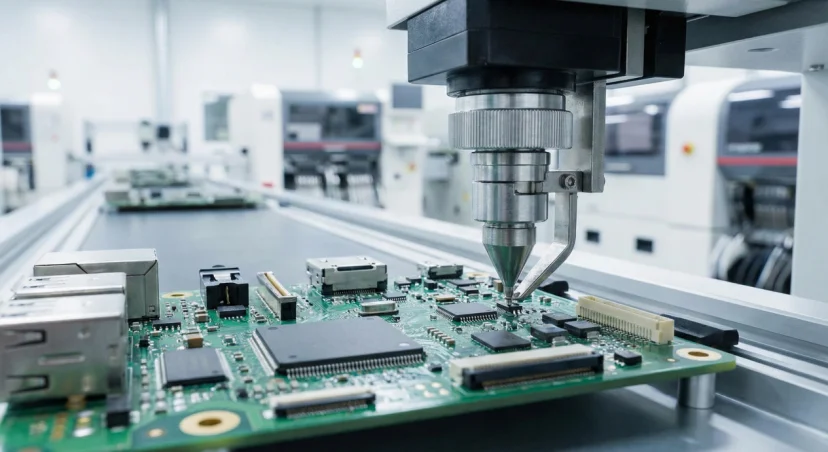
Selecting electronic contract manufacturers for a 2026 project requires more than comparing unit prices. For B2B buyers, the manufacturing partner can influence development speed, product quality, supply continuity, and the ability to scale after launch. We believe companies should evaluate a manufacturer as a long-term technical partner rather than simply as a production vendor. Engineering capability, quality management, supply-chain resources, flexibility, and communication all deserve careful consideration before a contract is signed.
Define Your Manufacturing Requirements First
Before contacting potential suppliers, we recommend establishing clear project requirements. These may include product type, expected annual volume, target cost, certification requirements, component specifications, production location, packaging needs, and anticipated launch date.
A clear specification enables more meaningful supplier comparisons. It also helps us, as the manufacturer, assess whether we can support the project from both technical and commercial perspectives. For companies developing customized electronics, requirements should address both the current prototype phase and the anticipated production stage.
Evaluate Engineering and Development Capabilities
As your contract manufacturer, we deliver more than assembly capacity. Electronics projects may face challenges involving PCB layout, component selection, enclosure design, thermal performance, manufacturability, and testing. With our in-depth engineering expertise, we can spot these issues before they turn into costly production problems.
We recommend asking prospective partners whether they offer design optimization, prototyping, DFM analysis, testing, and New Product Introduction (NPI) support. An integrated workflow can reduce communication gaps between engineering and manufacturing teams.
At Minewing, we provide support from concept development and hardware design through rapid prototyping, trial production, and mass manufacturing. Our engineering services include PCBA design, PCB layout, firmware, and electronics and enclosure optimization.
Assess Quality Management and Production Controls
Quality should be evaluated through measurable processes rather than general claims. Buyers should ask how incoming components are inspected, how production defects are detected, how finished products are tested, and how corrective actions are managed.
We also recommend reviewing quality records, certifications, inspection procedures, and traceability practices where appropriate. For products destined for different international markets, the manufacturer should understand the relevant certification and testing requirements.
At Minewing, our turnkey manufacturing offering covers component sourcing, SMT and DIP assembly, testing, final assembly, and packaging. We also provide quality and certification support for requirements such as CE and FCC, helping customers coordinate multiple production requirements through one partner.
Look Beyond the Price of a Manufacturing Agent ODM China
Cost remains important, but the lowest quotation does not necessarily represent the lowest total project cost. Engineering changes, poor production yields, component shortages, tooling problems, rework, and delayed deliveries can quickly eliminate an apparent price advantage.
When comparing a manufacturing agent ODM China option with other contract manufacturers, we recommend evaluating the complete cost structure. Consider engineering fees, tooling, materials, testing, packaging, logistics, minimum order requirements, and potential redesign costs.
We take a broader approach by combining engineering, sourcing, prototyping, manufacturing, assembly, and packaging. This one-stop structure can reduce the number of separate suppliers involved in a project and make responsibility easier to track.
Check Production Flexibility and Scalability
Demand can change significantly between prototype development and commercial launch. A suitable manufacturer should therefore be able to support different production volumes without forcing the customer into an unsuitable manufacturing model.
We recommend asking how a supplier handles prototypes, pilot batches, NPI, and mass production. Companies should also understand whether the manufacturer has strict minimum order quantities and whether production capacity can expand as demand grows.
At Minewing, we support projects from single-unit prototyping and low-volume trials through mass production, without strict MOQ requirements. Our process includes rapid prototyping, Engineering Validation Testing (EVT)/DVT/PVT trial production, DFM optimization, supply-chain setup, and volume assembly.
Examine Supply-Chain and Component Management
Electronics manufacturing depends heavily on reliable component sourcing. A capable contract manufacturer should have established processes for sourcing, supplier validation, component verification, and handling potential shortages.
We suggest asking whether the manufacturer can recommend alternative components when availability changes and whether those alternatives will be reviewed for compatibility before implementation. This becomes especially important for long-running B2B products where supply continuity matters beyond the initial production order.
Our manufacturing model includes global component sourcing and supply-chain coordination. We use these capabilities to connect engineering decisions with procurement and production requirements rather than treating sourcing as a separate activity.
Prioritize Communication and Business Manufacturing Partnerships
A technically capable factory can still become a difficult partner if communication is slow or responsibilities are unclear. For international projects, buyers should evaluate response times, project-management procedures, reporting practices, escalation processes, and the availability of dedicated technical contacts.
We consider these factors essential to successful B2B manufacturing partnerships. The relationship should support transparent communication and practical problem-solving throughout development and production.
At Minewing, we position ourselves as a long-term manufacturing partner rather than simply an assembly provider. We support startups, growing brands, and established companies with integrated services designed to connect engineering, production, supply-chain management, and global delivery.
Build a 2026 Supplier Evaluation Scorecard
A structured scorecard can make the final decision more objective. We recommend scoring candidates across engineering expertise, manufacturing technology, quality management, production capacity, scalability, sourcing capabilities, communication, lead time, cost, and long-term support.
We also recommend requesting a detailed quotation and production plan before selecting a supplier. Comparing these documents side by side can reveal differences that a simple unit-price comparison will miss.
Choosing a Partner for Long-Term Product Growth
The right electronic contract manufacturer should do more than produce the first batch. It should help us manage technical risks, improve manufacturability, maintain quality, secure components, and scale production as commercial requirements evolve.
At Minewing, we provide one-stop electronics manufacturing services covering design, prototyping, trial production, PCBA and enclosure manufacturing, assembly, testing, packaging, and global delivery. With more than 20 years of industry experience, we work with businesses seeking flexible, reliable, and cost-effective manufacturing support.
For 2026 projects, we believe the strongest B2B manufacturing partnerships are built around capability, transparency, flexibility, and shared responsibility. Evaluating these factors carefully can help companies choose a manufacturer that supports not only today’s production requirements but also the product’s next stage of growth.