Turning an electronics concept into a dependable commercial product requires much more than creating a functional circuit. Teams must balance performance, usability, mechanical constraints, component availability, manufacturing costs, testing, and production scalability. These challenges also create opportunities for companies that involve engineering and manufacturing expertise early. Through effective product design and prototyping, we can identify technical risks sooner, refine product performance, and create a clearer path from an initial concept to full-scale manufacturing.

Managing Complexity From the Start
Modern electronic products often combine multiple technologies within a compact enclosure. Wireless communication, sensors, processors, power systems, firmware, and mechanical components must operate together without compromising reliability.
This complexity makes early system architecture critical. Engineers need to define functional requirements, select appropriate components, consider thermal and mechanical constraints, and plan how the product will eventually be assembled and tested.
For B2B development teams, another challenge is balancing the ideal feature set against the target cost and production requirements. A technically impressive design may still require substantial modification if it is difficult or expensive to manufacture at scale.
Making Prototypes More Meaningful
A prototype should answer specific engineering questions rather than simply demonstrate that a product can turn on. Teams can use prototypes to evaluate functionality, mechanical fit, user interaction, wireless performance, power consumption, and other application-specific requirements.
This is one of the key benefits of our electronic prototype manufacturing. Physical samples reveal issues that may not surface through simulations or design reviews. They also provide engineering teams with a practical foundation to determine which design elements require modification prior to production.
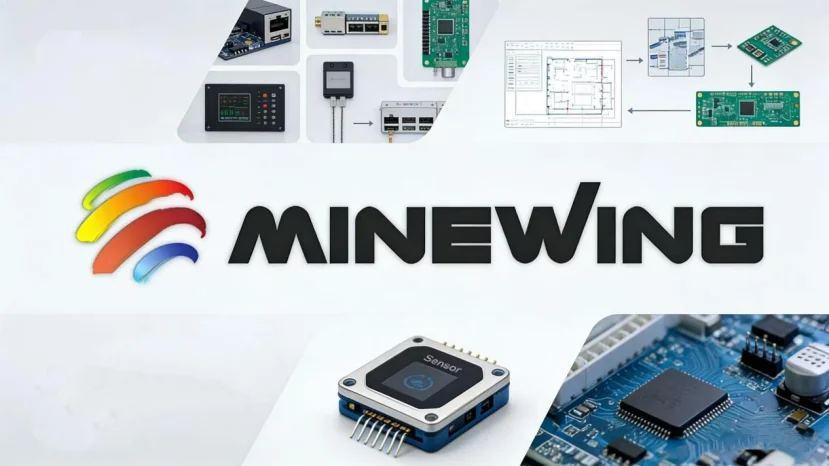
Our own development process at Minewing uses prototyping to validate ideas and designs, test functional samples, and confirm the production process with customers. We then use trial production as another stage for validating manufacturing readiness.
Designing Electronics for Real-World Manufacturing
One common challenge is the gap between an engineering design and a manufacturable product. PCB layout, component placement, tolerances, assembly access, testing requirements, and documentation all influence production.
IPC’s PCB design guidance covers areas such as board design, component mounting, dimensions, tolerances, and documentation, demonstrating why manufacturing considerations need to be incorporated into the design process rather than added at the end.
We address this challenge by combining design and manufacturing expertise. Our EMS services can provide technical advice on manufacturing processes, product optimization, rapid prototypes, testing improvements, and mass production.
A Real-World Example: Intelligent Security
Our intelligent security hub illustrates how multiple engineering disciplines can converge in one product. The plug-and-play system combines a high-decibel siren with a multi-protocol wireless gateway for devices such as door sensors, motion detectors, and smoke alarms.
The product presented specific mechanical and electronic challenges. The enclosure needed to remain stable under high-decibel vibration, while the PCB and firmware needed to support reliable wireless connectivity. We addressed these requirements through industrial and structural design together with PCB and firmware development.
The project also required coordinated project management and supply-chain support. Component shortages were managed during development, while rapid prototyping helped us validate the design before establishing automated testing processes for mass production.
Turning Supply-Chain Risks Into Opportunities
Component availability can significantly affect an electronics development schedule. A prototype may depend on parts that are available in small quantities but become difficult to source consistently for commercial production.
Early supply-chain evaluation can reduce this risk. Engineers and procurement teams should review component availability, approved sources, lead times, lifecycle considerations, and possible alternatives before the design is frozen.
Our EMS operation integrates component sourcing with electronics manufacturing. At Minewing, we purchase BOM components through original manufacturers’ first agents and supports customers from design and development through prototype production, testing improvement, and mass production.
Building a Scalable Production Process
Another challenge is ensuring that a successful prototype can become a repeatable production product. Manual engineering work that is acceptable for a few samples may be inefficient or inconsistent at larger volumes.
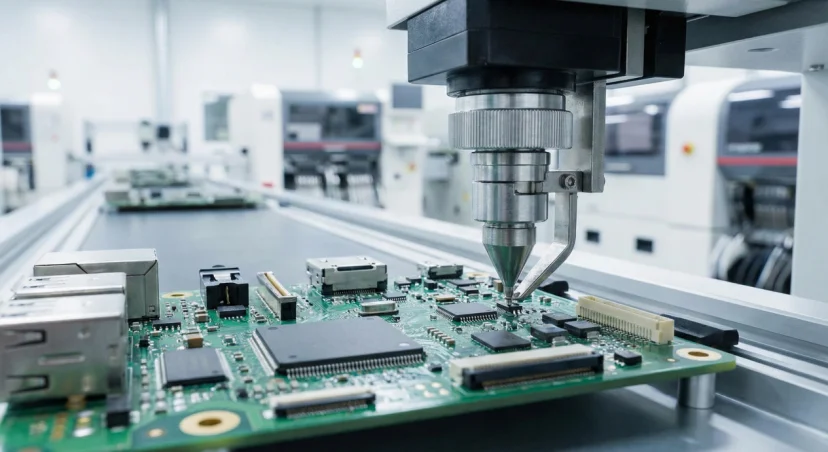
We therefore consider production requirements while developing the product. At Minewing, our published manufacturing process progresses from idea and design through prototype, trial production, and mass production. Our mass-production services include raw-material procurement, SMT, mold and shell production, assembly, testing, packaging, and shipment.
This integrated approach creates an opportunity to identify manufacturing problems earlier and reduce unnecessary handoffs between development and production teams.
Creating Better Products Through Iteration
The greatest opportunity in product design and prototyping is the ability to learn before committing to large-scale production. Each prototype iteration can reveal information about performance, manufacturability, usability, or cost.
At Minewing, we support projects from rapid product prototyping services to full-scale consumer electronics manufacturing, combining engineering, manufacturing, project management, and supply-chain coordination. Our goal is not simply to produce a sample, but to help transform an engineering concept into a robust and scalable product.
The journey from concept to production inevitably involves technical challenges, but those challenges can become opportunities when addressed systematically. By combining thoughtful design, targeted electronic prototype manufacturing, supply-chain planning, and production validation, B2B companies can improve product readiness while reducing avoidable manufacturing risks. Our experience with integrated development and manufacturing allows us to support that journey from the first concept through mass production.